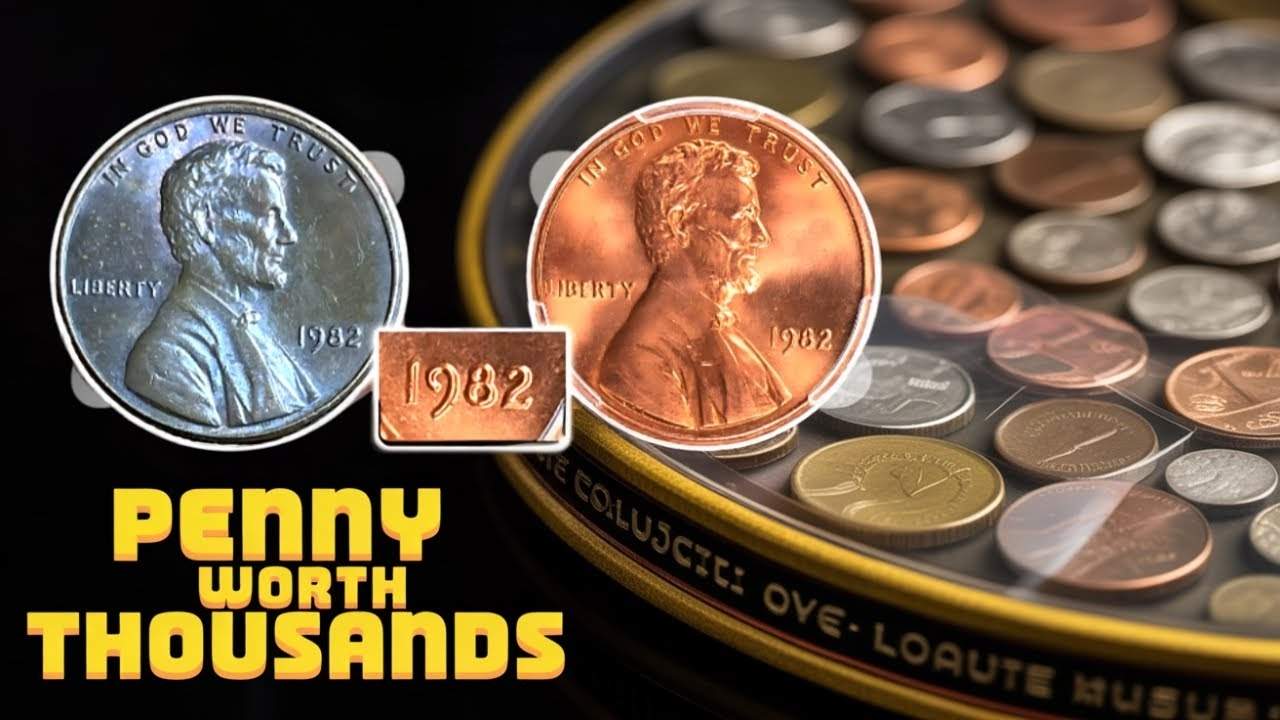
1982 Penny Value Guide: The 1982 Lincoln penny holds a unique place in United States coin history. It was a transitional year when the US Mint changed the metal composition of the one cent coin, leading to multiple varieties being produced in the same year. Because of this, collectors pay special attention to 1982 pennies, especially the Small Date and Large Date varieties. While most of these coins are still worth only face value, certain types and rare errors can be surprisingly valuable today.
Understanding the differences between these varieties is essential for collectors, casual coin hunters, and anyone who comes across old change. A simple penny from 1982 might seem ordinary, but with the right characteristics, it could be worth far more than one cent.

Why 1982 Was a Special Year for Pennies
Before 1982, pennies were made primarily of copper. Rising copper prices forced the US Mint to switch to a zinc core with a thin copper coating. During 1982, both copper and zinc pennies were produced, creating a total of seven standard varieties when date size, mint mark, and composition are combined.

This overlap makes 1982 one of the most studied years for Lincoln cents. It is also the only year where Small Date and Large Date styles exist across different metal compositions, which adds to the confusion and excitement for collectors.
Understanding Small Date and Large Date Varieties
The most noticeable difference between the Small Date and Large Date penny lies in the shape and size of the numbers in the year 1982. These differences are subtle, but once you know what to look for, they become much easier to identify.
On the Large Date variety, the numbers appear taller and more evenly shaped. The number two has a curved tail that points upward slightly, and the eight looks more balanced. On the Small Date variety, the numbers appear thinner and more compact. The two has a straighter tail, and the eight often looks slightly uneven, with the top loop appearing smaller than the bottom.

Collectors value the Small Date variety more in most cases, especially when paired with copper composition.
Copper vs Zinc Composition Differences
The easiest way to tell whether a 1982 penny is copper or zinc is by weight. Copper pennies weigh about 3.11 grams, while zinc pennies weigh around 2.5 grams. A simple digital scale can quickly reveal which type you have.
Copper pennies generally carry higher value due to their metal content and collector demand. Zinc pennies are far more common and typically worth only face value unless they are in exceptionally high condition or feature an error.
It is important to note that not all Small Date pennies are copper. Some Small Date coins were struck on zinc planchets, making the copper Small Date variety much scarcer.
List of 1982 Penny Varieties
There are seven commonly recognized 1982 penny varieties. These include 1982 Large Date copper, 1982 Large Date zinc, 1982 Small Date copper, 1982 Small Date zinc, 1982 D Large Date copper, 1982 D Large Date zinc, and 1982 D Small Date zinc.
The Denver Mint did not officially produce a Small Date copper penny in 1982. However, a few extremely rare examples are believed to exist, making them some of the most valuable Lincoln cents ever discovered.
Value of Common 1982 Pennies
Most 1982 pennies found in circulation are worth one cent to a few cents. Zinc Large Date and Small Date pennies are extremely common and have little premium unless they are uncirculated. Copper Large Date pennies can sometimes be worth two to five cents due to their copper content.
Uncirculated examples with strong luster and no wear may fetch slightly higher prices, particularly if graded by a professional service. However, the majority of circulated 1982 pennies remain everyday pocket change.
Rare and Valuable 1982 Penny Prices
The most famous and valuable 1982 penny is the 1982 D Small Date copper penny. This coin should not exist according to official mint records, yet a handful have been confirmed. These coins weigh 3.11 grams and display the Small Date design. If authenticated, they can sell for thousands of dollars, with some examples reaching prices above ten thousand dollars depending on condition.
Another valuable category includes major error coins. Off center strikes, double dies, and wrong planchet errors from 1982 can command significant premiums. Even zinc pennies can be valuable if they show dramatic minting mistakes.
High grade copper Small Date pennies from Philadelphia can also be valuable, especially in near perfect condition. While not as rare as the Denver error, they still attract strong collector interest.
How to Identify a Valuable 1982 Penny
Start by checking the date style using a magnifying glass. Compare the shape of the numbers carefully. Next, weigh the coin to determine whether it is copper or zinc. Look for a mint mark below the date. No mint mark means Philadelphia, while a D indicates Denver.
Examine the coin closely for errors such as doubling, missing details, cracks, or unusual shapes. Coins in better condition always carry higher value, so avoid cleaning them, as cleaning can drastically reduce their worth.
Tips for Collectors and Beginners
If you are new to coin collecting, the 1982 penny is a great starting point. It teaches important lessons about composition changes, design varieties, and error identification. Investing in a small digital scale and a good magnifying glass can go a long way.
Store your coins properly in holders or flips to prevent damage. Learn patience, as valuable coins often appear unexpectedly in everyday change. The thrill of discovery is a big part of what makes coin collecting so enjoyable.
Final Thoughts on the 1982 Penny Value Guide
The 1982 Lincoln penny proves that even the smallest denomination can hold big surprises. While most examples are common, a few rare varieties and errors can be worth serious money. Knowing the difference between Small Date and Large Date designs, along with copper and zinc compositions, is key to unlocking their value.