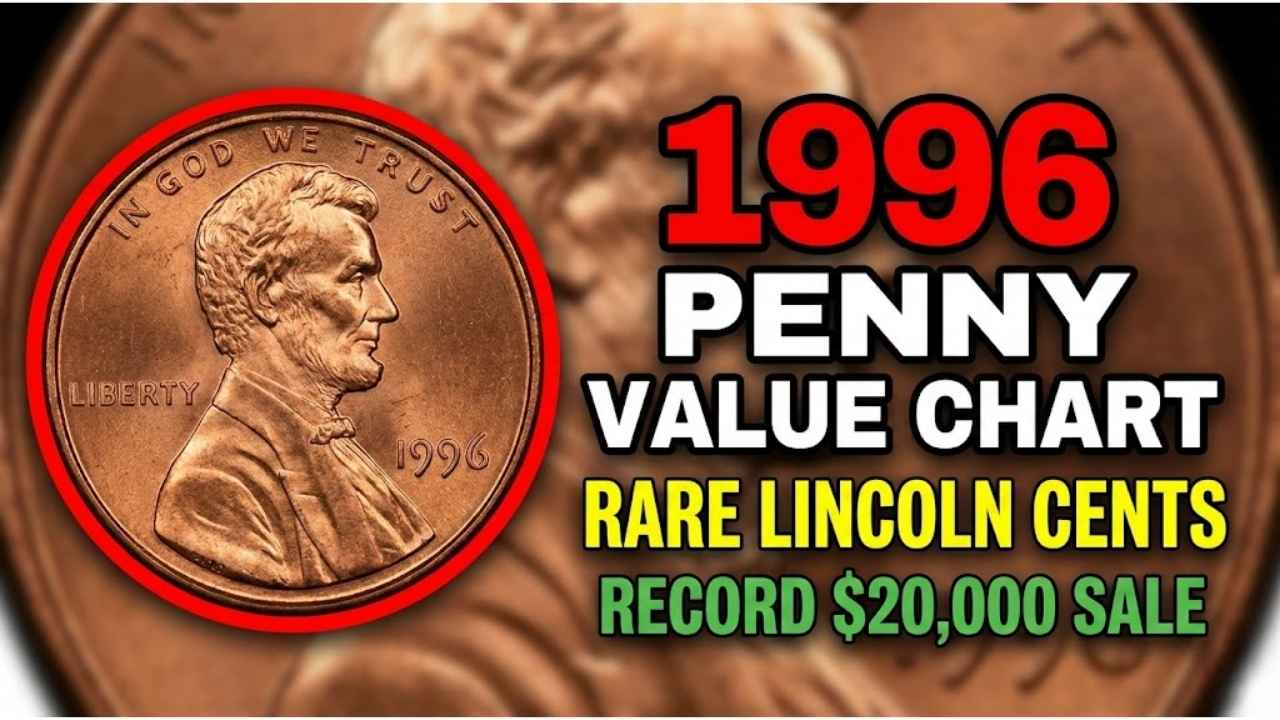
1996 Penny Value Chart: The 1996 Lincoln penny is often overlooked because it is relatively modern compared to classic rare coins. However, this humble one cent piece has gained attention among collectors due to certain rare varieties, high grade examples, and error coins that can be worth far more than face value. In fact, a record breaking sale close to twenty thousand dollars has placed the 1996 penny firmly on the radar of serious collectors.
While millions of 1996 pennies were minted, only a small percentage carry the features that make them valuable. Understanding what to look for can turn an ordinary coin into a surprising discovery.

Historical Background of the 1996 Penny
The Lincoln Memorial penny was still in circulation in 1996, nearing the end of its long run before being replaced by the Lincoln Bicentennial designs in 2009. By this time, pennies were made of zinc with a thin copper coating, a composition introduced in 1982.
Pennies from this era were produced in massive quantities to meet circulation demand. The Philadelphia and Denver Mints handled most production, while proof coins were struck in San Francisco. Despite high mintages, condition rarity and minting errors make some 1996 pennies highly collectible today.
1996 Penny Mintages and Mint Marks
In 1996, pennies were struck at three US Mint facilities. Philadelphia pennies carry no mint mark, Denver pennies feature a D mint mark, and San Francisco produced proof coins marked with an S.
Philadelphia minted billions of pennies in 1996, making them extremely common in circulation. Denver mint pennies are also abundant, though slightly less common than Philadelphia issues. San Francisco proof pennies were produced in far smaller numbers and were sold directly to collectors as part of proof sets.
Mint marks play an important role in value, especially when combined with condition and rarity.
Composition and Physical Characteristics
The 1996 penny is composed of 97.5 percent zinc with a thin copper plating. It weighs approximately 2.5 grams and measures 19.05 millimeters in diameter. Because of the zinc core, these pennies are prone to corrosion if the copper plating is damaged.
Most circulated examples show signs of wear, discoloration, or small bubbles caused by zinc corrosion. Coins that retain their original color and luster are much harder to find and are far more valuable to collectors.
Standard 1996 Penny Value Chart Overview
For most collectors, a typical circulated 1996 penny is worth exactly one cent. Even uncirculated examples are often only worth a few cents unless they are in exceptional condition.
Philadelphia and Denver pennies graded in lower mint state levels are common and affordable. However, values increase sharply for coins graded at the highest levels, especially those certified as near perfect.
Proof pennies from San Francisco generally carry higher value due to their superior strike and limited mintage, though they are still accessible to collectors.
Rare and Valuable 1996 Penny Varieties
The most famous and valuable 1996 penny is a high grade Lincoln cent that achieved a record sale approaching twenty thousand dollars. This value came not from an error or special design change, but from its extraordinary condition. Coins graded at the absolute top of the scale are incredibly rare, even for modern issues.
In addition to condition rarity, collectors also seek out doubled die errors from 1996. These errors occur when the die strikes the design more than once, creating visible doubling on letters or numbers. While minor doubling is common, strong doubled dies can command hundreds or even thousands of dollars.
Error Coins That Increase Value
Error coins are one of the most exciting aspects of modern penny collecting. In 1996, several types of errors have been discovered, including off center strikes, broadstrikes, and clipped planchets.
Off center pennies show part of the design missing, often revealing a blank area. The more dramatic the offset while still showing the date, the more valuable the coin becomes. Broadstrikes occur when the coin is struck without a retaining collar, causing it to spread wider than normal.
Another valuable error involves plating issues, where the copper layer peels or blisters. While minor plating flaws are common, dramatic examples in high condition can still attract collector interest.
Proof 1996 Pennies and Their Value
Proof pennies minted in San Francisco were struck with specially prepared dies and polished planchets. These coins feature mirror like fields and sharp details, making them visually striking.
Most proof pennies are well preserved since they were sold to collectors and not released into circulation. As a result, values are generally modest unless the coin is graded perfectly or exhibits a rare error.
Deep cameo proof coins with strong contrast between the design and background are especially desirable and often bring higher prices at auction.
How Condition Impacts 1996 Penny Prices
Condition is the single most important factor when determining the value of a 1996 penny. A circulated coin with wear and damage has little to no premium. An uncirculated coin with original luster is worth more, but true value appears only at the highest grading levels.
Coins graded at the top of the mint state scale are exceptionally rare because even tiny imperfections can lower the grade. This is why a penny minted in the billions can still sell for thousands of dollars if it survives in flawless condition.
Proper storage and handling are essential for preserving condition. Even fingerprints can reduce a coin’s value significantly.
Tips for Finding Valuable 1996 Pennies
Start by checking your spare change and coin rolls from banks. Focus on uncirculated looking coins with bright color and sharp details. Use a magnifying glass to inspect for doubling, errors, or unusual features.
Avoid cleaning coins, as cleaning almost always lowers value. If you believe you have found a rare or high grade example, consider professional grading to confirm authenticity and condition.
Patience is key. Valuable coins are rare, but consistent searching increases your chances of finding something special.
Final Thoughts on the 1996 Penny Value Chart
The 1996 Lincoln penny is proof that modern coins can still hold significant value. While most examples are common, rare errors and ultra high grade coins have the potential to be worth hundreds or even thousands of dollars. The record breaking sale near twenty thousand dollars highlights the importance of condition and collector demand.
Whether you are new to coin collecting or an experienced enthusiast, the 1996 penny offers an exciting opportunity to learn and search for hidden value. Sometimes, extraordinary treasures come from the most ordinary places, even from a simple penny.