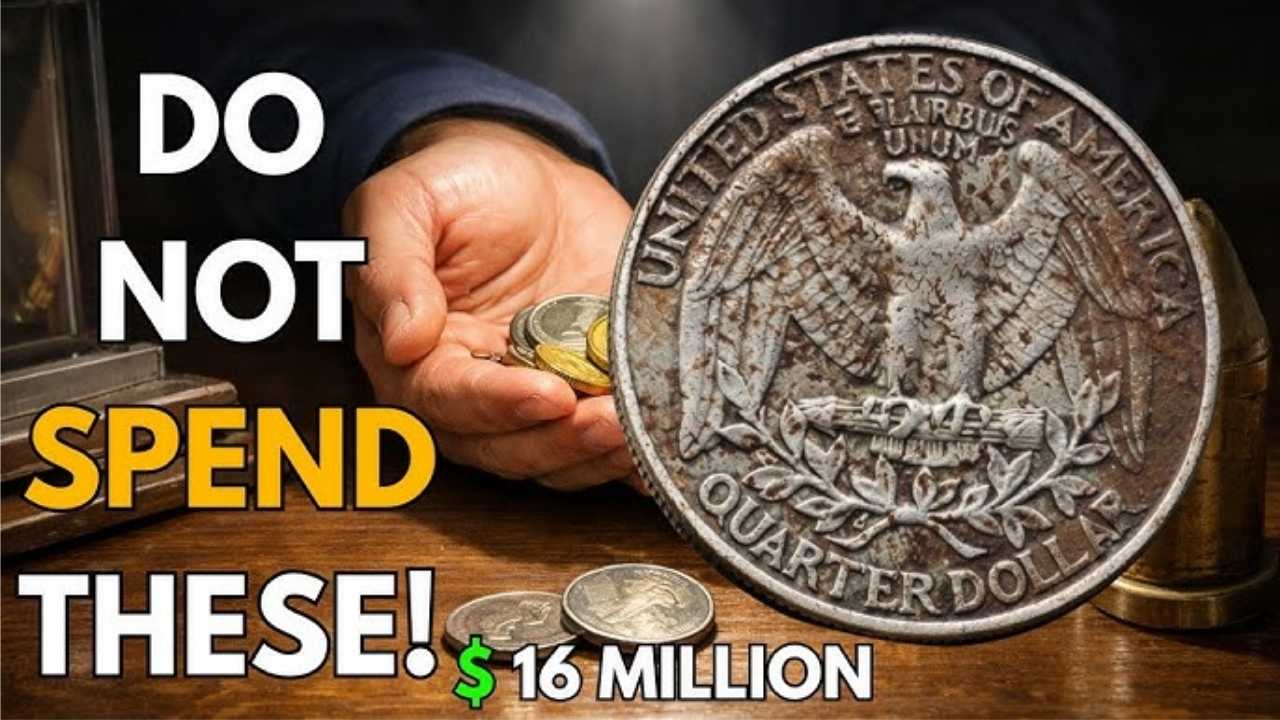
Top 5 Valuable Quarters: Quarters are one of the most familiar coins in the United States. Almost everyone has carried one in their pocket, used one at a vending machine, or dropped one into a parking meter. Yet behind this ordinary coin lies a world of extraordinary value. Some rare U.S. quarters have sold for hundreds of thousands of dollars, with the most exceptional examples reaching prices close to three hundred thirty five thousand dollars. These coins are prized not for everyday use, but for rarity, history, and collector demand. This guide explores the top five valuable quarters every collector should know.
Why Some Quarters Are Worth So Much Money
The value of a quarter depends on far more than its face value or metal content. Rarity is the most powerful factor. Coins with low mintages or unusual production circumstances are harder to find and more desirable. Condition also plays a major role, as collectors pay premium prices for coins with sharp details and minimal wear. Minting errors, transitional issues, and historical importance can turn a simple quarter into a six figure collectible.
1796 Draped Bust Quarter
The 1796 Draped Bust Quarter is one of the rarest and most valuable quarters ever produced. It was the first quarter dollar officially issued by the United States Mint. Production numbers were extremely low, and only a small number have survived to the present day.

This coin represents the early days of American coinage when the nation was still defining its identity. High grade examples are incredibly scarce and have sold for well over three hundred thousand dollars. Collectors value this quarter not only for its rarity, but also for its place in American history.
1804 Draped Bust Quarter
The 1804 Draped Bust Quarter is another early U.S. coin that commands extraordinary prices. Although the date suggests 1804, most of these quarters were actually struck later using leftover dies. Regardless of the timing, the coin is recognized as an official issue and is highly collectible.
Very few examples exist, and most are held in private collections or museums. When one appears on the market, competition is intense. Prices regularly reach into the hundreds of thousands, placing this coin among the most valuable quarters ever made.
1827 Capped Bust Quarter
The 1827 Capped Bust Quarter is legendary for its extremely low mintage. Although records show a small number were struck, only a handful are known to exist today. This makes it one of the rarest quarters in U.S. numismatics.
Collectors prize this coin for its scarcity and classic design. Well preserved examples are almost never available, and when they are, prices can exceed three hundred thousand dollars. The 1827 quarter proves that survival rate can matter more than original mintage numbers.
1916 Standing Liberty Quarter
The 1916 Standing Liberty Quarter is one of the most popular and recognizable rare quarters. It was the first year of the Standing Liberty design, but production was limited as the Mint prepared to revise the design the following year.
Only a small number were produced, and most were quickly circulated. High grade examples are extremely rare and valuable. In top condition, this quarter has sold for well over one hundred thousand dollars and continues to rise in value as collector demand grows.
1932 D Washington Quarter
The 1932 D Washington Quarter may look ordinary at first glance, but it is one of the most important key dates in modern U.S. coinage. It was minted in Denver during the first year of the Washington quarter series, and production numbers were surprisingly low.
Many were used during the Great Depression, leaving few in high condition. Uncirculated examples are rare and highly sought after. Prices can reach tens of thousands of dollars, and top certified specimens have approached six figure territory.
How Condition Impacts Quarter Values
Condition is one of the most critical factors in determining a quarter’s value. Coins with strong details, original surfaces, and minimal wear are worth far more than heavily circulated examples. Even rare quarters lose significant value if damaged or cleaned.
Collectors rely on professional grading to assess condition accurately. A small difference in grade can mean a price difference of tens of thousands of dollars, especially for rare early quarters.
The Role of History and Demand
Historical significance adds another layer of value. Quarters from the early days of the United States carry a sense of national heritage that modern coins cannot replicate. Demand from collectors continues to grow as fewer high quality examples remain available.
In 2026, collectors are increasingly focused on tangible historical assets. Rare quarters combine history, artistry, and scarcity in a way that appeals to both investors and hobbyists.
How to Know If You Have a Valuable Quarter
Start by checking the date and design. Early quarters from the late eighteenth and early nineteenth centuries are always worth examining. Look for unusual wear patterns, sharp details, and original surfaces. Avoid cleaning the coin, as this can drastically reduce value.
If you believe you have a rare quarter, professional authentication is essential. Many high value coins have been counterfeited, and expert verification protects both buyers and sellers.
Why Rare Quarters Continue to Rise in Value
Rare quarters continue to increase in value because supply is fixed and demand keeps growing. Once a coin is lost, damaged, or locked into a private collection, it effectively disappears from the market. This scarcity drives competition and pushes prices higher.
Collectors also appreciate the portability and durability of coins. Unlike many investments, rare quarters can be stored easily and enjoyed visually while holding long term value.
Final Thoughts on High Value U.S. Quarters
Most quarters are worth only twenty five cents, but a select few are worth life changing amounts of money. The top five valuable quarters discussed in this guide represent the peak of U.S. coin collecting, with prices reaching up to three hundred thirty five thousand dollars.
For collectors, knowledge is the greatest asset. Understanding rarity, condition, and history can turn curiosity into opportunity. Rare U.S. quarters prove that even the smallest coins can hold enormous value when time, scarcity, and demand align.